Build Your Dream Career in Aviation
Celebrate Independence Day by taking the first step toward your aviation career. Explore cabin crew and ground staff training, aviation careers after 12th, and career preparation at Skyrange Academy.
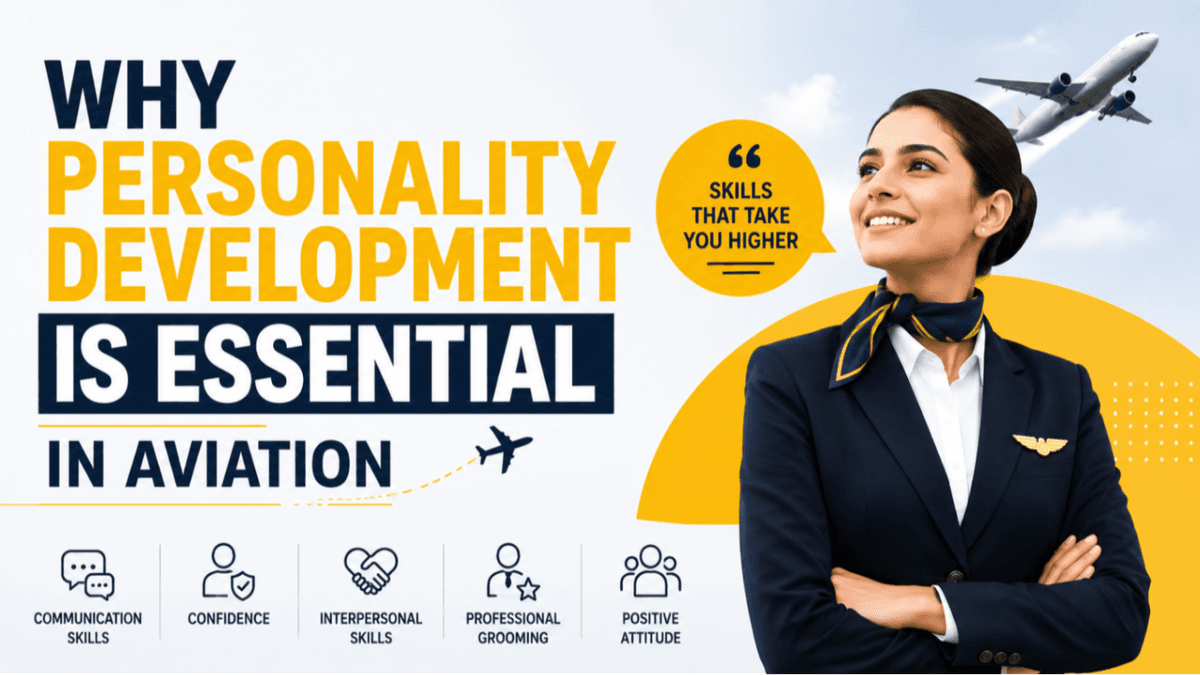
A career in aviation involves much more than technical knowledge.
Whether a student is preparing for a Cabin Crew, Airport Ground Staff or pilot career, professional behaviour and communication can play an important role in day-to-day aviation environments.
Aviation professionals interact with passengers, colleagues and other teams, often in situations where communication, confidence and professionalism matter.
This is why personality development in aviation can be an important part of career preparation.
Personality development is not about changing someone's identity. It is about helping students improve the way they communicate, present themselves and handle professional situations.
Personality development in aviation refers to developing professional qualities that can help students communicate and interact effectively in an aviation environment.
These may include:
These skills can complement the technical or academic knowledge required for a particular aviation career.
Communication is an important part of working in a people-oriented industry.
Aviation professionals may need to communicate with passengers, colleagues and different operational teams.
For students preparing for aviation careers, developing the ability to speak clearly, listen carefully and communicate respectfully can be valuable.
Good communication is not about using complicated language.
It is about making your message clear, professional and easy to understand.
Confidence can affect how a student presents themselves during interviews, presentations and professional interactions.
For someone preparing for a Cabin Crew or Airport Ground Staff career, confidence can help them communicate more comfortably with different people.
However, confidence should not be confused with overconfidence.
Professional confidence means being comfortable with yourself while remaining respectful, attentive and willing to learn.
Appearance is one part of professional presentation, particularly in customer-facing aviation roles.
Students can learn the importance of maintaining a neat, professional appearance and understanding appropriate workplace grooming standards.
Grooming is not simply about looking good.
It can contribute to presenting yourself as prepared and professional in an interview or workplace environment.
Aviation is a highly people-oriented industry.
Professionals may interact with people from different backgrounds, personalities and cultures.
Strong interpersonal skills can help students:
Learning how to interact effectively with people is therefore an important part of aviation career preparation.
Communication isn't only about speaking.
Listening is equally important.
Aviation professionals need to pay attention to information, understand what others are saying and respond appropriately.
Students can develop active listening by:
These habits can be useful both during interviews and in professional environments.
Working in aviation can involve interacting with many different people and handling changing situations.
Developing a calm and professional attitude can help students approach challenges more constructively.
A positive attitude doesn't mean ignoring problems.
It means focusing on understanding the situation and responding professionally.
Aviation careers involve coordination between people and teams.
Students should therefore understand the importance of:
Teamwork is especially relevant for students preparing for customer-facing and operational aviation roles.
Personality development can also support interview preparation.
An interview is not only about knowing the answers.
Candidates also need to communicate their thoughts clearly and present themselves professionally.
Students can practice:
Regular practice can help students become more comfortable in interview situations.
For students interested in Cabin Crew careers, personality development can complement their aviation training.
Cabin Crew professionals work in a customer-facing environment where communication, teamwork, professionalism and interpersonal skills are relevant.
Students should therefore work on both their knowledge and their professional presentation.
Personality development does not replace the eligibility requirements or training associated with a particular aviation career. Instead, it can form part of broader career preparation.
Yes, professional communication and interpersonal skills can also be useful for students interested in Airport Ground Staff careers.
Ground staff roles can involve interaction with passengers and coordination with different airport teams.
Developing communication, confidence, patience and professional behaviour can help students prepare for these interactions.
Personality development is a gradual process.
Students can start with simple habits:
Talk about a topic for a few minutes every day. Focus on clarity rather than trying to use complicated vocabulary.
Pay attention when others speak and avoid interrupting.
Conduct mock interviews with a teacher, mentor or friend.
Practice maintaining appropriate posture, facial expressions and eye contact during conversations.
Reading can expose students to new vocabulary, ideas and ways of expressing themselves.
Ask for constructive feedback and identify specific areas you can improve.
Punctuality, discipline, respect and responsibility are important parts of professional development.
At SkyRange Academy, aviation preparation goes beyond simply understanding a course syllabus.
Students preparing for an aviation career can benefit from developing both career knowledge and professional skills.
Our aviation training pathways include DGCA CPL Ground Training, Cabin Crew Training and Airport Ground Staff Training.
If you are considering an aviation career, understanding the skills required for your chosen pathway can help you prepare more effectively.
Personality development can help aviation students improve communication, confidence, interpersonal skills, professional presentation and interview readiness.
Communication, confidence, active listening, interpersonal skills, teamwork, professional grooming and a positive attitude are useful areas for Cabin Crew candidates to develop.
Personality development is not a substitute for the formal eligibility, licensing and training requirements for becoming a pilot. However, communication, professionalism, teamwork and confidence are valuable professional skills for aviation careers.
Practice self-introduction, mock interviews, clear communication, professional body language and confident but respectful responses. Constructive feedback can also help identify areas for improvement.
Yes. Being naturally quiet does not prevent someone from pursuing an aviation career. Communication and professional interaction skills can be developed through practice and training.
To develop Personality check out skill development program : https://www.skyrangeacademy.com/skill_development_program
For more Aviation & Hospitality insights, stay connected with us on LinkedIn.

Build Your Dream Career in Aviation
Celebrate Independence Day by taking the first step toward your aviation career. Explore cabin crew and ground staff training, aviation careers after 12th, and career preparation at Skyrange Academy.

✈️ Exploring Career Opportunities for Ground Staff in India
India’s aviation industry is growing fast, driving demand for skilled ground staff. They ensure smooth airport operations, assist passengers, and uphold safety. If you’re interested in behind-the-scenes roles, many exciting career paths await you.

Top Airlines Hiring Cabin Crew & Ground Staff in India
An airline job can be an exciting career opportunity—but preparation should begin before the interview call.